Cowboys Don t Die Western Skeleton Review
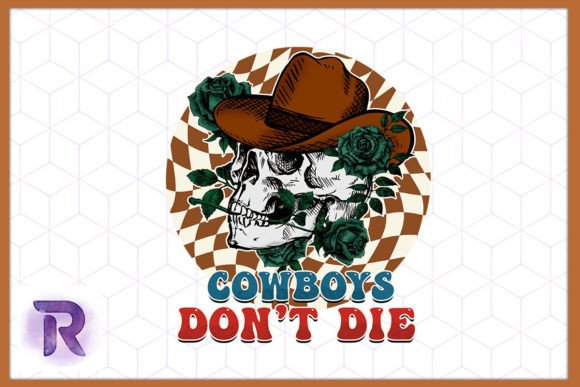
As a designer who spends half my life staring at digitized files and the other half troubleshooting stitch errors on the machine, I don’t just look for "cool" designs. I look for viability. Can this actually be stitched? Will it hold up after twenty washes? Does it translate well from a digital PNG to a tangible, sellable product? Today, I am evaluating Cowboys Don t Die Western Skeleton, a graphic that promises a rugged, edgy aesthetic perfect for the western or Americana niche.
The product description notes that this is primarily a cutting file provided as a high-resolution 300 DPI transparent PNG. While this makes it incredibly versatile for sublimation, vinyl, or laser cutting, many of us in the handmade community immediately ask: how does this behave when translated into thread? If you are planning to use this as a base for machine embroidery, applique, or even as a reference for hand-stitching a custom patch, here is my practical breakdown of how Cowboys Don t Die Western Skeleton performs in real-world scenarios.
First Impressions and Visual Personality
The moment you load the file, the mood is unmistakable. The skull motif combined with cowboy imagery taps directly into a specific cultural vein—rebellious, nostalgic, and bold. For an embroidery project like this, visual hierarchy is everything. In my experience, skeleton designs can easily become muddy if the negative space isn't respected. Fortunately, the clean lines of this PNG suggest that the design relies on strong silhouettes rather than overly intricate, tiny details that might get lost in fabric texture.
This is not a delicate floral piece; it is a statement. It screams custom apparel and boutique branding. When I imagine this on a garment, I picture it centered on the back of a heavyweight cotton sweatshirt or placed prominently on the chest of a denim jacket. The visual personality is confident, which means it demands confidence in execution. If you are an Etsy seller looking to expand your catalog into the western wear category, this design asset offers immediate recognition value. Customers in this niche often gravitate toward grit and authenticity, and this graphic delivers exactly that vibe without needing excessive embellishment.
Real-World Application: Where It Shines
I have tested similar graphics across various mediums, and Cowboys Don t Die Western Skeleton finds its natural home in durable, structured items. Here is where I see the highest potential for success:
- Sweatshirt Embroidery: Heavy cotton blends provide the perfect stabilizing base for a dense design. The western theme pairs effortlessly with distressed fabrics or dark heathered greys.
- Tote Bag Design: Canvas totes are staples for craft fairs and markets. A large, bold print or embroidered version of this skull works exceptionally well as a handmade product that appeals to both men and women.
- Embroidered Patch: If you plan to create iron-on or sew-on patches, this design’s clear boundaries make it ideal. You can add a thick satin stitch border to define the edges against any background fabric.
- Holiday Embryery: While not strictly Halloween, the skeleton motif has year-round appeal in certain subcultures. It fits perfectly into fall-themed collections or biker-themed gifts.
For the small business owner, versatility is key. Because this is provided as a high-quality digital file, you aren't limited to one technique. You could use it for screen printing on tees, heat transfer vinyl on water bottles, or as a stencil for fabric paint. This multi-use capability increases the ROI on your initial purchase, making it a smart addition to your design assets library.
Technical Considerations and Stitch Density
Here is where we need to be realistic. The source file is a PNG, meaning it is vector-like but raster-based. If you intend to digitize this manually or trace it into an embroidery file, you must pay close attention to stitch density.
Skeleton ribs and hat brims often contain thin, parallel lines. In machine embroidery, if these lines are too close together, they will merge into a solid blob, losing the detail entirely. Conversely, if they are too far apart, the fabric will show through, looking unfinished. I recommend testing the design on scrap fabric first. Use a stabilizer appropriate for your fabric type—cut-away for stretchy knits, tear-away for stable wovens—to ensure the tension remains consistent.
When choosing thread colors, contrast is your best friend. A white or cream thread on a black background will pop dramatically, emphasizing the bone structure. However, avoid using light threads on textured fabrics like boucle or heavy tweed, as the thread will get swallowed by the weave. Also, consider the hoop size. If the design is large, ensure your machine’s hoop can accommodate it without requiring re-hooping, which can lead to misalignment issues.
Pitfalls to Avoid
Not every canvas is created equal. There are specific situations where Cowboys Don t Die Western Skeleton might struggle:
- Small Hoop Sizes: If you are working on baby clothes or small accessories, ensure the design scales down cleanly. Tiny details in a skull design can disappear if reduced below a certain threshold.
- Stretchy Fabrics: Unless you use proper stabilizers, the weight of the stitching (if heavily filled) can cause puckering on thin jersey or spandex blends.
- Dense Stitch Areas: Avoid placing the thickest parts of the design over seams, pockets, or curved surfaces like caps. Flat surfaces yield the most professional results.
- Frequent Washing: If this is for a commercial item, advise customers to wash inside out. Even high-quality threads can fade or fray if subjected to harsh detergents and high heat over time.
Final Verdict for Creators
Cowboys Don t Die Western Skeleton is a strong contender for anyone building a brand around rugged aesthetics. It is visually striking, thematically clear, and technically adaptable. Whether you are creating a personalized gift for a client or mass-producing craft business merchandise, this design offers a solid foundation.
My advice? Do not rush into production. Test the layout. Mock it up in black and white to check contrast. Verify your licensing terms if you plan to sell finished goods. But once those boxes are checked, you have a design that speaks directly to its audience. It is bold, it is memorable, and when executed well, it transforms a simple piece of fabric into a wearable statement. For the savvy creative entrepreneur, this is a tool worth having in your arsenal.